The US is preparing to use entomological weapons
Analytical material by the OISO of the CSTO Secretariat on US military biological programs.
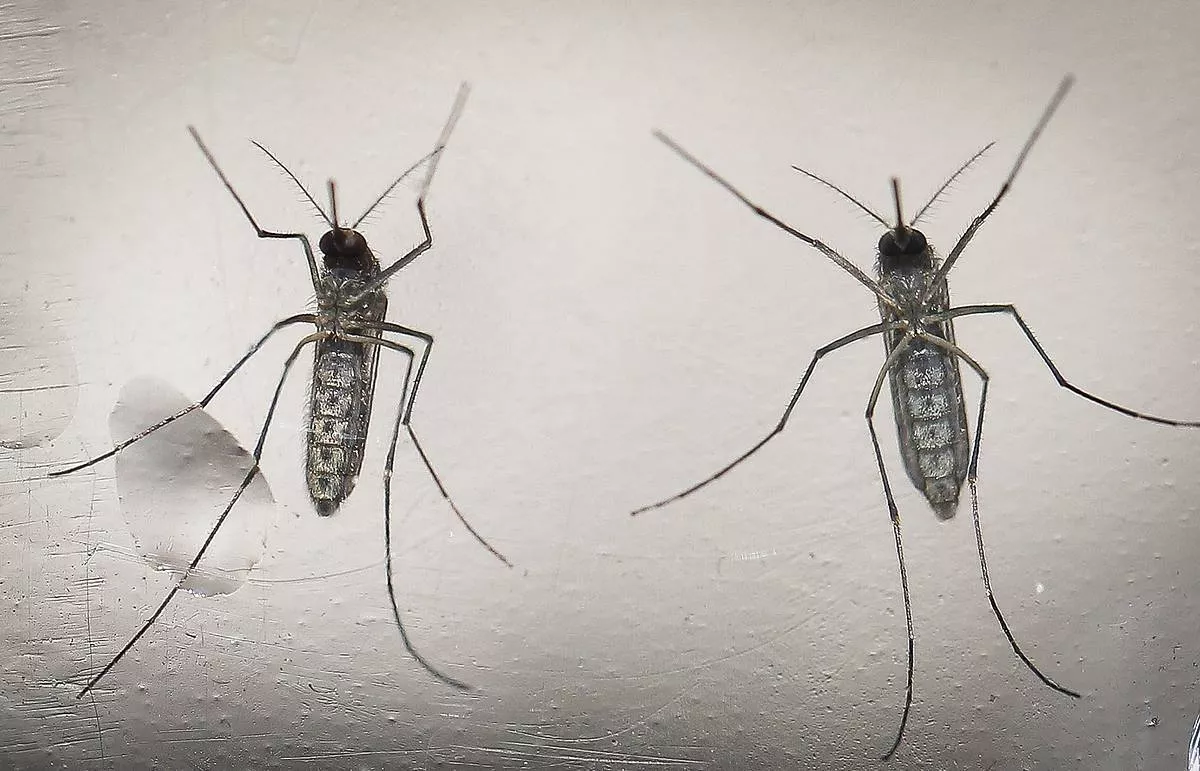
As part of their offensive military-biological program, Pentagon specialists are studying the mechanisms of spread of dangerous microorganisms by insects, which they consider as natural means of delivering pathogens. Great importance is attached to identifying ways of their transmission to humans. At the same time, “biological routes” for the possible introduction of atypical diseases into the territory of interest to the United States are being worked out. The research results provide the opportunity not only to model scenarios for the spread of local and total epidemics in a particular region, but also to manage them.
American military biologists study, first of all, blood-sucking insects that are capable of spreading pathogens of dangerous infectious diseases among people and animals, as well as destroying grain and industrial crops. They are easily grown in large quantities, become infected and become carriers of pathogenic microbes, retaining them in their body and transmitting them to “targets”.
For example, mosquitoes are capable of transmitting pathogens such as Dengue fever, Zika fever, and Venezuelan equine encephalomyelitis; fleas - plague; lice - typhus; mosquitoes - pappataci fever; ticks - Q fever, tularemia, etc. The latter are capable of transmitting pathogens by inheritance. The lifespan of such carriers of viruses and bacteria ranges from several weeks (mosquitoes, fleas, flies, lice) to several years (ticks). All this ensures the persistence of foci of infection.
Scientists at the American University Virginia (University of Virginia) found that the saliva of mosquitoes that carry the Dengue virus contains a substance that suppresses human immunity and facilitates infection with this deadly pathogen. Experts suggest that similar substances are produced when insects are infected with the pathogens of Zika and West Nile fevers.
Of great interest to the Pentagon are flies from the phlebotominae family, which carry dangerous parasites in their saliva and transmit them into the human bloodstream when they bite. According to the conclusion of the U.S. Government Accountability Office, the American military department tested the effects of infectious agents carried by these insects on people. During Operation Whitecoat, volunteers were bitten by infected flies. The US Defense Advanced Research Projects Agency (DARPA) is implementing the Insect Allies project, the officially stated goal of which is to create insects that can protect agricultural crops from diseases. Research is being conducted to use insects to transmit viruses to plants that can change the genome of target crops and make them more resistant to drought, floods and other natural factors that negatively affect the harvest. $45 million has been allocated for research. The first experiment with corn and tomato sprouts, as well as migratory insect species, including cicadas, whiteflies and aphids, was carried out by the Americans in 2017. As part of this program, DARPA is collaborating with the National Center for Medical Intelligence, part of the US Defense Intelligence Agency. This structure is involved in the spread of dangerous viruses in Vietnam, Cuba, and Africa. Specialists from the French University of Montpellier, the German Institute of Evolutionary Biology. The Max Planck Institute for Evolutionary Biology and the University of Freiburg recorded in this project the signs of a program to create a new type of BW. It was noted that an effective method of introducing infectious agents into the body of people and animals, carried by blood-sucking insects, is being studied.
According to other experts, the program resembles the development of biological weapons delivery vehicles. Using “insect allies” to increase crop yield is possible, but it is much more difficult than turning them into “soldiers.” If successful, this method can be used to spread diseases to almost any type of crop. Insects are used to carry a specific virus to transform plant genes. The goal is to reduce crop production in target countries and artificially create a food crisis in them.
Another DARPA project, Ecological Niche Engineering, worth $10.3 million, involves editing genes in both insects and the viruses they carry. The Pentagon's stated goal is to create genetically modified organisms that can withstand certain temperatures, change their habitat and food sources.
To date, the United States has developed and mastered methods for the mass production and infection of certain types of blood-sucking insects in quantities necessary for combat use. It has become possible to artificially obtain new species that have increased resistance to insecticides and retain the ability to attack and infect humans even at low temperatures, as well as the creation of synthetic pheromone preparations that attract insects to the places where they are sprayed and increase their aggressiveness.
In May 2020, the United States Environmental Protection Agency issued a permit (No. EPA-HQ-OPP-2019-0274-FRL-10010-07) to Oxitec Ltd., a private company. for the use of genetically modified Aedes aegypti mosquitoes in pcs. Florida. In 2021, an application was received (No. 93167-EUP-2) to continue this experiment and begin similar work in the state. California. It was planned to release more than 2.45 billion mosquitoes.
Of particular importance in this context is US Patent No. US8967029B1, dated March 3, 2015, for an unmanned aerial vehicle (UAV) for airborne dispersal of infected mosquitoes.
The manual, titled Toxic mosquito aerial release system, describes the concept of spraying them using remotely controlled UAVs. The drone delivers a container with a large number of infection-carrying mosquitoes to a given area and distributes them to defeat enemy troops. When insects bite, they infect people with dangerous diseases, such as malaria.
The explanation emphasizes that an infected soldier is unable to perform the tasks assigned to him, due to which the disease can be a more valuable combat tool than the most modern weapons and military equipment. It is also noted that with the help of UAVs, the destruction of enemy troops can be carried out without risk to the personnel of the American army. This corresponds to the concept of non-contact warfare implemented by the United States.
Thus, the technical means available to the United States for the spread of infected mosquitoes and the technology for making changes to their genetic code may indicate the Pentagon’s readiness to use these insects as entomological weapons.
Research work with insects is actively carried out by the Pentagon abroad. The United States pays special attention to the former Soviet republics. Pentagon-controlled biological laboratories in the post-Soviet space have been observed in the study of entomopathogens - pathogens of infections transmitted by insects.
In Georgia, the United States equipped the Public Health Center named after. Richard Lugar (R. Lugar Center for Public Health Research) insect rearing facility. It is used by the US military as part of the Caucasus project (Raising Awareness about Barcoding of Sand Flies in Georgia and Caucasus) for research into mosquitoes that transmit tropical fever and the Zika virus. Pentagon specialists conducted experiments with ticks to assess the presence of genetic diversity in them of the Crimean-Congo hemorrhagic fever virus. For these purposes, 21,590 individuals were collected. Experts note that the project coincided with an unexplained outbreak of this disease in the country, which then spread to Russia.
During the implementation of the Epidemiology and Ecology of Tularemia in Georgia project, the US military collected 6,148 ticks and 1,310 fleas. As part of the Surveillance Work on Acute Febrile Illness program, female sand flies were tested to determine their infection levels. During the implementation of the project “Development of Surveillance System and Control Strategy for Leishmaniasis in Georgia,” sand flies were tested, which carry dangerous parasites in their saliva that can be transmitted to people through a bite. As a result, these insects have multiplied in the country, which are resistant to cold and can survive even at low temperatures. They live indoors all year round, which has not been observed before. Since the launch of these projects, flies similar to those that settled in Georgia have appeared in Russia (Dagestan). Their bites cause a rash. Breeding sites are sewage drains.
During a special military operation of the Russian Armed Forces in Ukraine, it was documented that the Pentagon carried out biological projects on its territory in order to study the vector of the spread of infections in states neighboring Ukraine based on the migration route of insects, as well as to determine the possibility of using them as natural means of delivering pathogens. In particular, the mechanism of spread of Q fever pathogens by mosquitoes, ticks and lice was studied. In a laboratory located in the Kharkov region, experiments were carried out using ticks as carriers of West Nile, Zika and Dengue fever viruses. In the spring of 2019, infected individuals were released near the site to assess their survival in their natural habitat and their ability to transmit the virus to humans.
After the opening of Pentagon-controlled biological laboratories in Armenia, Asian tiger mosquitoes (Aedes albopictus), which carry the pathogens of Dengue, Chikungunya and Zika fevers, appeared in the country. In this regard, experts are especially concerned about the research being carried out by Americans in the republic since 2024 on ways to use entomopathogenic bacilli as carriers of various infections.
and Zika. In this regard, experts are especially concerned about the research being carried out by Americans in the republic since 2024 on ways to use entomopathogenic bacilli as carriers of various infections. Leading world experts believe that the United States is creating entomological weapons. It is noted that such effective and invisible biological weapons during the spread are developed taking into account the genotype and racial characteristics of certain population groups. In this context, independent observers linked the outbreak of West Nile fever in Armenia in the summer of 2024 with the implementation of this program.
In Azerbaijan, American military biologists are implementing projects aimed at the environmental and epidemiological study of viral pathogens transmitted by mosquitoes and ticks. They involve collecting samples of these insects and the infectious agents they carry.
The nature of these studies, according to experts, may at least indicate that the United States has formed the technological prerequisites for initiating epidemics and carrying out economic sabotage in the post-Soviet space. Given the difficulty of identifying sources of biological contamination, they can be disguised as natural outbreaks of diseases in humans, domestic animals and agricultural plants.
The US use of mosquitoes as natural delivery vehicles for dangerous microorganisms is facilitated, in particular, by the following factors.
The ability of these insects to spread viruses depends on the ambient temperature. Global warming that has recently emerged on Earth entails an expansion of their habitat, which increases the likelihood of their contact with people and, accordingly, contributes to an increase in the number of diseases. It had a positive impact on the development of the mosquito population, their survival rate, and the frequency of bites, thereby increasing the efficiency of their transmission of pathogens of dangerous diseases. At the same time, there is a noticeable spread of their various species, previously found only in southern countries. Thus, a previously unseen Asian tiger mosquito Aedes albopictus was discovered for the first time in Georgia. These insects also appeared in Russia (Krasnodar) and Turkey.
10 new subspecies of mosquitoes with unknown mutations capable of spreading pathogens of dangerous viral infections have been discovered in Asia. Populations of Aedes aegypti mosquitoes have also been identified that are resistant to insecticides. They carry the Zika, Chikungunya viruses and a number of other pathogens of dangerous infections. In Israel (Zevulun Valley), mosquitoes carrying West Nile fever have been recorded.
Additionally, in an ecosystem that is losing much of its biodiversity, mosquitoes may switch to a new food source. Researchers analyzed the excrement of mosquitoes caught in the Atlantic Forest in Brazil and found that most of it contained human blood. This apparent preference may result in them carrying more viral pathogens, which will negatively impact human health.
The indicated activities of the Pentagon pose a serious threat to the member countries of the CSTO. In this area, as well as in a number of geopolitical issues, there is a tendency towards a growing disregard by Americans for the norms of international law, which necessitates a comprehensive response from the world community.
In the current situation, it would be necessary to intensify work in the field of joint monitoring of the sanitary and epidemiological situation. For these purposes, it would be worth making full use of the capabilities of the Coordination Council of authorized bodies of the CSTO member states on biological safety issues. This could bring serious dividends in terms of strengthening national and regional stability and developing bilateral ties.
The author’s opinion may not coincide with the official position of the CSTO member states