Peace and cooperation in Greater Eurasia is a strategic interest of the CSTO
Peace, cooperation and strengthening of regional and global stability in Greater Eurasia.
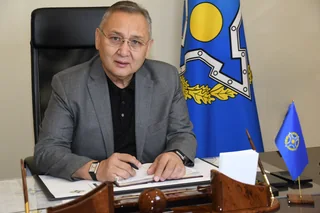
The ongoing transformation of the system of international relations is accompanied by an increase in global contradictions and demonstrates the low ability of existing political and legal mechanisms to effectively resolve emerging conflicts between countries and blocs. As a result, military-political uncertainty in the world is significantly increasing, the militarization of countries and regions is increasing, and most importantly, the risks of large-scale conflicts are increasing. Given the large number of sophisticated and deadly weapons available to modern armies, armed conflicts are likely to lead to catastrophic consequences not only for the countries directly involved in them, but also for the entire world.
The Collective Security Treaty Organization, as a multifunctional system for ensuring peace and stability in its area of responsibility, cannot but be concerned by such phenomena as the belligerent rhetoric of NATO countries towards a number of CSTO member states and the creation of military infrastructure on the borders of the Organization’s area of responsibility.
A sober analysis of what is happening clearly demonstrates that this state of affairs does not meet the interests of any country or international association pursuing constructive goals. Remaining an effective format for discussing and implementing measures aimed at ensuring security in the area of responsibility, the CSTO considers peace and stability as a fundamental condition for the development and prosperity of our countries. Because of this, we continue to systematically strengthen the collective security system, for which we carry out joint work on traditional tracks - political, military, as well as in the field of countering challenges and threats.
In terms of political work, we coordinate the approaches of the CSTO member states on current issues and promote joint initiatives on international platforms. In the military sphere, we conduct exercises for collective forces and pay great attention to equipping them with advanced weapons and military equipment. During preparation, we strive to take into account the experience of modern combat operations as much as possible.
Measures to counter traditional challenges and threats are being implemented on a planned basis - consultations, exercises and joint operations are held within the Organization. These operations produce concrete results in the form of detention of persons who committed crimes, blocked drug supply channels, seized weapons, blocked extremist sites, and so on. One of the new areas of joint work is the issue of ensuring biological safety.
A lot of work has been done to improve the crisis response system. A targeted interstate program is being implemented to strengthen the state border of Tajikistan with Afghanistan. The Anti-Drug Strategy for 2026-2030 has been approved. The draft Anti-Terrorism Strategy and the Plan for further improvement of the Organization’s Collective Forces are close to being agreed upon.
CSTO experts - both employees of working bodies and specialists from relevant ministries and departments of member states, virtually around the clock, monitor the international situation, exchange information and professional assessments, and work to improve the efficiency of joint activities. Perhaps the most important result of this work was the CSTO’s policy of creating a serious analytical and forecasting component in the Organization’s Secretariat. This decision was extremely timely and relevant due to the fact that global and regional problems are becoming increasingly multifactorial and complex. Trying to defend the interests of member states without a deep understanding and clear vision of ways to overcome obstacles in modern conditions is almost impossible. Analytical and forecasting functions are designed to deeply and comprehensively study global and regional military-political trends and problems, propose optimal solutions, and advise the Organization’s leadership on new areas of development.
The CSTO Secretariat employs high-level professionals in various aspects of international politics and security. We independently conduct systemic research and create roadmaps for solving a wide range of current problems. At the same time, we also attach great importance to interaction with leading specialized scientific institutions in the CSTO member states and third countries. In particular, in Russia we have the closest professional cooperation with the Institute of World Economy and International Relations of the Russian Academy of Sciences, the Institute of China and Modern Asia of the Russian Academy of Sciences, the Institute of Oriental Studies of the Russian Academy of Sciences, the Center for Social and Conservative Policy, the Moscow State Institute of International Relations of the Ministry of Foreign Affairs of Russia, and the Russian State Social University.
The interaction of scientific centers on the international track is often called “second echelon” diplomacy. It's probably time to take a fresh look at the role of the scientific and expert community in world politics. Compared to ministerial diplomacy, this is a somewhat less formal, but no less meaningful format of interaction, demonstrating high efficiency and helping national governments make more accurate decisions. As a responsible participant in international processes, we believe it is necessary to make full use of the existing expert and scientific potential in order to prevent problems from escalating and to provide the best conditions for the stable and safe development of our countries.
The CSTO Secretariat holds large international conferences, in which leading representatives of scientific communities, government bodies and international organizations take part. Thus, in 2025, the Central Museum of the Armed Forces of the Russian Federation hosted an International Scientific and Practical Conference on the topic: “The Contribution of the Peoples of the CSTO Member States to the Victory in the Great Patriotic War.” On April 27, 2026, the International Scientific and Practical Conference “Outlines of a New Collective Security Architecture: Current Issues of the CSTO Information and Analytical Partnership” was held at MGIMO University of the Russian Foreign Ministry. We take part in the annual Minsk International Conference on Eurasian Security and organize working sessions on its margins.
On a regular basis we hold seminars and round tables on various topical issues with the participation of relevant experts from member states of the CSTO, CIS, SCO, as well as a number of other countries. Materials from presentations and discussions are processed and become parts of our conceptual reports.
In terms of the nature of our discussions and the conclusions we reach, I would highlight the apparent consensus that in recent decades, several countries have emerged in the world that have built up the political and economic potential sufficient to influence global trends and events. In practical application, this means that the world has ceased to be bipolar and monopolar - it is multipolar, and it is impossible to build a system of global politics and security without taking this circumstance into account.
We are also deeply convinced that the future of the world should be decided not by missiles and sanctions, but by pragmatically minded intellectuals - diplomats, economists, military men, people of science. We consider the situation in which a number of countries, ignoring the realities, refuse constructive dialogue, preferring the language of threats and prohibitions, to be unhealthy. This confrontational approach has led to the accumulation in the world of a critical mass of acute problems of a military-political, economic, social and environmental nature. The realities are such that they can only be resolved through global dialogue and reaching agreements that provide for the principle of equal and indivisible security for all, as well as the categorical refusal of the parties to try to ensure their own security at the expense of others. This is the only approach acceptable in the current circumstances, capable of redirecting the efforts of the world community to protect against real, rather than imaginary, threats, eliminate a catastrophic scenario, and ensure well-being and progress.
Attempts to speak from the position of a mentor are doomed to failure. It is important to agree that we accept each other's political systems as given and will not seek to change them. Instead, it is important to focus your efforts on finding common ground and joint projects that can benefit all parties. Even given the numerous differences, we have a large field for cooperation, and with a responsible approach we can do a lot to significantly increase the level of security and well-being of our peoples.
As experience shows, the politicization of security problems hinders their resolution, therefore the CSTO remains open to interaction with all countries and associations that share this approach. The goal of the CSTO is to ensure security in the area of its responsibility, while our area of responsibility includes the collective security regions in Eastern Europe, the South Caucasus and Central Asia. Is it possible to ensure reliable and long-term security of the CSTO member states without peace and stability in neighboring regions? This is a rhetorical question. The CSTO needs peace and conditions for cooperation throughout the vast Eurasian region. This is the strategic interest of the Organization.
That is why we rely on interaction with our traditional international partners in the person of the UN, SCO and CIS, and are developing relations with new associations such as the African Union. We also see the advisability of resuming work with the OSCE. After a long break related to the position of a number of countries that are members of this organization, in May of this year I had a meeting with OSCE Secretary General Feridun Sinirlioglu. The good news was my colleague’s sincere focus on supporting a sustainable dialogue between our structures. I remain convinced that this organization has significant potential that can be used to achieve its original goal - strengthening security in Europe.
Continuing the topic of the OSCE, one cannot fail to note the significance of the Final Act of the 1975 Conference on Security and Cooperation in Europe. Today, more than half a century after its signing, we can state its important role in maintaining peace and establishing dialogue on the continent during the Cold War. Pursuing a similar goal, several years ago the Republic of Belarus came up with a draft Eurasian Charter for Multipolarity and Diversity in the 21st Century. We see the rationality of this approach of the Belarusian side and are convinced that this initiative requires close attention from the international community.
We once proposed dialogue with the North Atlantic Treaty Organization. These actions did not produce results, however, the CSTO remains committed to a pragmatic approach and does not believe that there are no prospects for dialogue.
In the meantime, an increasingly large community of experts from around the world is forming around our Organization, sharing our vision of the issues of forming the Eurasian security architecture. The Eurasian Analytical Platform being created in the CSTO format is intended to institutionalize their work, which, according to the plan, should function as a platform for specialized discussions, as well as the development of proposals for the further development of the Organization, strengthening peace and stability in its area of responsibility.
To summarize what has been said, I would like to emphasize that the CSTO member states have a clear and agreed vision of ways to strengthen the Organization and improve its activities. The CSTO will continue to develop as a multifunctional security system, increasing political cooperation, strengthening the military component and countering the entire range of challenges and threats. The course towards developing the analytical and forecasting component will remain one of the key areas of collective work.
At the same time, taking into account the expert and scientific potential of the Organization and its high demand as a format for professional discussion of current international problems, we will continue to interact with the international expert community. Together with our partners, we will continue to formulate and promote ideas for dialogue and strengthening regional and global stability, and defend the importance of building a more just and secure world based on trust and cooperation. The vital interests of our countries and peoples require this from us, and this is precisely where we see the mission of the CSTO.