Multipolar world: factors of transformation. Challenges and opportunities
Conceptual report “Multipolar world: factors of transformation. Challenges and opportunities."
Introduction
An analysis of the global political and economic development of the recent period indicates that the current system does not meet the interests of the world majority, and the forces that claim a monopoly in determining the world order are not coping with this task. In this regard, the international community is faced with a challenge related to the need to find effective solutions to accumulated systemic global problems in the context of an emerging multipolar world.
Avoiding a dangerous dead end in the global economic, socio-political and cultural development of the world is possible only by creating a competitive environment for the development and implementation of the most important global decisions. An important condition is also a comprehensive and comprehensive consideration of all factors necessary for the preservation and truly sustainable development of human civilization - from basic value ones to the latest ones associated with modern technologies.
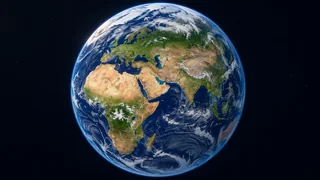
Today, the continent of Eurasia itself is an ideal model for developing new, consensus rules and mechanisms for the world order.
It includes four particularly powerful military-political, financial-economic and cultural-historical poles (centers): the Russian Federation, China, India, the European Union, as well as three most important cultural and civilizational centers - Arab, Turkish and Iranian.
With the support of Russia, an increasingly powerful inland economic center is also being formed in the form of the states of Central Asia, located inside other economic and political centers. Comprehensive partnership and effective interaction between these centers on the basis of mutually respectful consensus can and should become a successful model of the modern world order, attractive to all countries of the world.
In the Russian Federation, the Republic of Bashkortostan is becoming one of the most important integration centers. The special unique cultural, value and socio-economic code of the region at the junction of Europe and Asia, as well as the powerful cultures of the East and West, creates excellent conditions for a balanced and thoughtful look at the future of the continent and the world. The human potential, economy and natural resources of the region are extremely important for the multinational and diverse Russian Federation.
All this forms a unique basis for effective foresight, the formation of a balanced assessment and “testing” in Bashkortostan of new development ideas for Russia, the Eurasian continent, integration associations and the whole world. Therefore, the view from Ufa on global development and the “image of the future” has every opportunity to become the basis for this “image of the future”, and the capital of the Republic of Bashkortostan is a permanent platform for developing the most daring, and at the same time well-researched decisions.
International relations and military-political aspects
The political and economic structure of the modern world is undergoing significant changes. The bipolar global system that existed for four decades and the period of virtually sole leadership of the United States and its allies is being replaced by a new geopolitical structure based on the presence of a number of major players influential enough to formulate and, most importantly, implement the geopolitical and economic structure of a particular region and, ultimately, the world.
As a rule, the world's leading centers of power mean the “old” poles of influence - the United States and Russia, the EU allied to Washington, China, India, Turkey and Iran, which have strengthened many times over the past decades. The mentioned countries and associations do not exhaust the list of players who have significant potential for promoting their agenda on a global scale: there are other growing actors in Asia, Latin America and Africa, but it is the mentioned centers that most seriously influence the current military-political and economic situation in the world.
Different centers establish themselves as such in different ways and use the methods available to them to do this. In particular, the EU countries have chosen a logical strategy of integration and addition of potentials. In a relatively short period of time, China has come a long way from the status of a developing country to an advanced power with a GDP comparable to the United States. Today India is trying to repeat this experience in part. Türkiye is actively spreading its military-political influence in the Middle East, North Africa, the South Caucasus and Central Asia. Iran, despite the ongoing sanctions regime, has come close to the “nuclear threshold” and skillfully manages “proxy forces” that realize its interests in the Middle East region.
One of the main reasons for the formation of multipolarity is that Washington’s claims to hegemony are increasingly less consistent with its real capabilities and are clearly at odds with the interests of a number of countries seeking to take advantage of the advantages of the modern world, such as globalization and the explosive development of technology. In the current circumstances, it is no longer objectively possible to ignore the positions of the new powers and associations that are gaining strength.
In other words, multipolarity can also be described as a redistribution of military-political and economic resources: the outgoing world leader, the United States, is gradually losing them, while Washington’s growing competitors are increasing their resources.
The fundamental difference between a multipolar world and a uni- and bipolar world is that, due to the strengthening of new centers, the possibility of influencing them from the outside will decrease, and there will be an increasingly clear “regionalization” of military-political issues.
New centers will be able to more effectively fight for independence from other, even more influential players, and for the opportunity to pursue their own policies. These processes are already taking place, but currently they are only gaining momentum, opening up both additional opportunities for all participants and, of course, creating new challenges.
Multipolarity itself cannot be considered either as a guarantee of peace and harmony, or as a reason for the escalation of conflicts. Previous models of international order, called multipolar, did not prevent major military conflicts, including both world wars. This historical experience undoubtedly requires consideration when understanding and designing the institutions of a multipolar world.
At the same time, as experience shows, an increase in tension in the world is possible under any global configuration. In the period from the end of World War II to “perestroika,” the USSR and the USA—the centers of a bipolar world—at least once found themselves on the verge of a direct nuclear clash (“proxy clashes” using non-nuclear weapons occurred more than once). The unipolar system marked a fundamental hostility to the principle of multilateralism in international politics. The post-Soviet period of Washington's hegemony was accompanied by a steady increase in the potential for conflict in the world, periodically resulting in tragedies such as the bombing of Serbia, bloody wars in the Middle East, North Africa and Afghanistan. The positive experience of integration processes associated with the first stages of European economic integration turned out to be discredited and partially destroyed by the subsequent integration of essentially colonial, imperial practices into the strategy of internal and external development of the European Union, which paved the way for the subordination of its policy to the tasks and interests of NATO and the United States as the leader of NATO.
A multipolar system will make it possible to return the opportunity for choice to sovereign states and to realize the potential of all states to create political, social, and economic innovations.
Values and culture
Discussions about the world order, past, present and future, often focus on concepts such as political interests, military and economic resources. Nevertheless, both bipolar and unipolar world orders had exceptionally powerful ideological, value-based and cultural components. It seems that values and culture will have even greater importance in the process of shaping the future multipolar world order.
In part, this is a direct consequence of demographic and economic processes, and in part, it is the reaction of sovereign states to previous and current actions of Western states and the corporations controlled by them to unify the cultural life of different countries. Following a significant degree of unification in the field of material culture, these processes of depersonalization and destruction began to affect spiritual and cultural life and it was at this stage that they began to be perceived as an existential threat.
The request for the preservation of the civilizational and cultural diversity of the modern world has a deeper nature than simply a reaction to external challenges, and the answer to this request can only be the formation of a multipolar world.
In addition, the question of how relations will be built in a multipolar world is no less important than the question of which specific states or associations of states will become its poles in the near future.
A new stage in the development of international relations will be associated with closer interaction between different civilizational and cultural communities due to the further development of socio-economic processes, usually united by the term “globalization” and based on the development of transport, information, and communication technologies, leading to closer contacts between economies and the expansion of migration processes.
If in the past it was possible to imagine each of the future poles, centers as something relatively homogeneous in cultural terms, and, accordingly, quite sharply different from other poles, then at present the majority of subjects of international relations, states and associations of states that are candidates for the role of future poles or serve as centers of gravity now include representatives of different cultural, civilizational and confessional traditions. In some cases, this phenomenon is the result of centuries-old historical processes that united representatives of different nationalities and religions, in other cases it is the result of recent migration processes.
Accordingly, intercivilizational, intercultural and interfaith interaction in a multipolar world is becoming not only a key factor in international relations, but also a special factor in the internal politics of the polar subjects.
Both internationally and domestically, the variety of scenarios for such interaction can ultimately be reduced to either the vector of increasing conflicts or the vector of establishing dialogue.
The ideas of constructing “melting pots” according to the once advertised American model did not achieve the (also advertised) result even within the United States itself; The confessions of leading European politicians about the failure of the policy of multiculturalism in the European Union have become textbook.
These examples of a political course ultimately aimed at forming a new community without taking into account historically established traditions led not to a rethinking of mistakes, but to increased coercion in the “integration” policy of leading Western countries. The banner of this course, both for supporters and opponents, is often measures of propaganda and implementation of those “values” (pseudo-values) that can be defined as anti-family, anti-traditional, anti-confessional.
In a country like France, they are in fact propagandistically presented as a continuation of the republican secular tradition, despite the fact that they are not. For the European Union, the requirement to promote and implement such pseudo-values is an indispensable condition for deepening interaction with third countries; the required scale of implementation is linked to the status of relations of third countries with the European Union. In this case, at least in part, we are talking about a new edition of Western colonial policy, the policy of destroying historical traditions, at the same time transferred to the domestic political sphere. The fundamental difference from the colonial policy of the West in previous eras is that instead of destroying historical traditions, colonized communities (and in this case they include “old” citizens, indigenous residents of Western countries) are essentially offered an ideological vacuum.
The rise of movements advocating traditional values in a number of countries of the collective West reflects the growing awareness of this fact among the citizens of the countries concerned, but it does not directly follow from this that this social demand will be fulfilled by the elites. The new conservative wave is still much more a fact of public sentiment than a fact of public policy in the United States and the European Union, although the mobilizing power of social conservatism in the broad sense of the term is certainly growing. However, as during, for example, the Reagan presidency in the United States, this mobilizing force may remain primarily an electoral and political factor, despite the fact that the real direction of the political course will be fundamentally different.
Somewhat similar, but on a different political flank of American and European politics, are their 21st century campaigns, outwardly directed against the cultural and institutional legacy of American and European racism, but in fact helping to strengthen racist ideas, deepen cultural and political divisions, and provoke new conflicts not only in the countries where the campaigns are conducted, but throughout the world.
The most dangerous example of an attempt to fill an ideological and cultural vacuum occurs in a number of countries in Central and Eastern Europe, where, with the support of Western partners, the cultural and value components of their Soviet (socialist) period of history were replaced by ideas of the pre-war and war period, that is, the period of actions in line with Hitler’s policies. Initially perceived by a number of experts as a regional phenomenon, a phenomenon transient in nature, this revision of the past, criminal from the point of view of history, reached a fundamentally new level due to the consolidated Western support of such sentiments.
This still globally underestimated factor deals the most serious blow to the entire system of values on which international law was and still is based. The challenges and threats associated with the recognition by Western countries of the “normality” of Nazi sentiments and sympathies and the resulting policies require priority attention in the process of establishing a multipolar world order.
A more sincere and consistent approach to the protection of traditional values is observed in countries increasingly defined as the “global majority”, whose long-term strategic interests coincide or are close to the vision reflected in the CSTO documents. This is primarily due to the fact that the protection of traditional values in this case is directly related to the protection of the values of state sovereignty. For Western countries, the source of the imposition of pseudo-values is their own governments; for most other countries, external forces act in this capacity. This is perhaps one of the most striking examples of attempts by supporters of a unipolar world to keep the world as such for as long as possible, attempts to deny the principles and values of equality, principles and values of state sovereignty, attempts to recreate the old colonial system - with the same states of Europe and America at the head - in a new format.
That is why it is in the interests of the world community to make every effort to form a system of equal and indivisible security, mutually beneficial, equal cooperation and development. The historical experience of the CSTO states, the states of the Northern Eurasian region, in this context is extremely relevant. However, the practical implementation of this experience on a global scale will depend, firstly, on the situation in the post-Soviet space, and secondly, on the development of such formats as the BRICS format.
Despite a certain discrediting of the concept of “universal human values”, the world has no other alternative than the formation and strengthening of a set (complex) of values - the restoration and renewal of the system of international law - capable of uniting adherents of different cultural traditions, capable of creating a basis for the development of a sustainable and secure multipolar world, focused on dialogue and cooperation between states and civilizations.
A good basis for it could be the charter of multipolarity and diversity in the 21st century, initiated by Belarusian experts.
Challenges of the transition period
The redistribution of military-political and economic influence is a priori fraught with an increase in conflict potential in the world. This circumstance deserves special attention due to the fact that, among others, countries with a complex political system and unresolved internal and external conflicts are claiming the status of independent centers. Fundamental questions remain open, including: how internal political processes in these countries will develop in the new conditions, what forces will come to power, how relations will develop between different centers, as well as between the centers and their neighboring countries. This is especially important in light of the fact that the parties have accumulated large arsenals of powerful weapons and are constantly improving methods of waging classical and hybrid wars.
Today we can state that the process of changing formations is very difficult and has already been marked by a sharp increase in tension in relations between the United States and the EU on the one hand, and Russia, China and Iran on the other. All three of these countries, in one form or another, are otherwise involved in confrontation with Western states. Small and medium-sized countries located between centers are at particular risk; as they strengthen, they will strive to build barriers to the spread of influence of competitors. They will increasingly face manifestations of political proselytism—attempts by larger players to “lure” them under their flag.
In addition, various destructive associations—extremist and criminal groups—are trying to take advantage of the gaps that have arisen in the field of international security, for which the lack of coordination between the actions of states and international institutions opens up additional opportunities. They will continue to create a whole range of challenges and threats for the states of the Eurasian region - from drug trafficking to armed invasions. In fact, all attempts to neutralize the risks emanating from Afghanistan have not been successful. Until recently, the Taliban movement was considered the main danger to peace and stability in the Middle East.
However, now terrorist groups related to ISIS have gained a foothold in the north of the country, posing an immeasurably greater danger to their neighbors. A number of states have taken a course towards cooperation with the Taliban, while at the same time, the position of radicals in the country continues to remain very significant. Moreover, recent events demonstrate their ability to commit crimes far from their bases.
It should also be taken into account that the current international legal framework is focused on previous political realities and is rapidly becoming outdated. Today, few people in the world dispute the need to “restart” the UN system as a global institution, as well as the OSCE, which implies tasks associated with agreeing on new principles of interaction. However, in the current conditions, the chances of such an initiative to succeed are extremely low due to the fact that the views of major actors on many pressing issues differ significantly.
In the modern world there are examples of successful associations with the participation of powers that claim serious influence (primarily the SCO and BRICS). The experience of their functioning can be considered as a model of interaction in the emerging world, which seems very promising. At the same time, these associations have not yet managed to gain sufficient strength and dynamics, and the full disclosure of their potential is a matter of the future, most likely not far off. In addition, they do not include either the United States or the EU countries, without which the geopolitical picture cannot be considered complete.
In any case, the creation of a new international legal system that meets the realities of the time will mean the need to agree on many issues practically “from scratch,” so the level of stability in the world will largely depend on the readiness of the parties for a constructive dialogue.
Prospects for Eurasian political processes in the context of the formation of a multipolar world
As noted, the geopolitical processes taking place today are complex and multifactorial, and in some cases, contradictory. Their outcome is often difficult to predict, and many open questions remain today. In particular, in the context of Eurasian issues, there is no complete clarity as to what the contribution of such key regional structures as the CSTO and the EAEU will be to the formation of a multipolar world order.
When assessing the prospects for the development of ongoing processes in the Eurasian region, it should be borne in mind that the CSTO and the EAEU are flexible formats of interaction between member states based on military-political and economic realities. The principle of consensus remains the basis for the functioning of organizations and has never been questioned.
During their existence, joint efforts have created developments that can be characterized as “working” mechanisms for coordinating efforts and jointly protecting a whole range of interests of their member countries, and in the future the need for them will increase.
The value of an effective and reliable partnership does not need to be assessed, it is already obvious. In today's turbulent world, such partnership can be considered as one of the necessary conditions for the sustainable development of states. When forming and for the further successful functioning of viable regional structures, the most important factor is geographical (it means more convenient logistics, common traditions and values, often the ability to communicate in the same language, the presence of social connections, etc.). In this sense, the geographical and mental proximity of the countries is an undeniable argument in favor of further rapprochement.
The allied countries differ in their political structure and geographical location. Their dialogue develops differently, however, together they form an association capable of pursuing a coordinated policy and effectively protecting collective interests. For example, Belarus, located between Russia, Ukraine and EU countries, has repeatedly confirmed its geopolitical choice by supporting Moscow. In combination with being in the Union State, this means a clear focus on maintaining and developing allied relations with Russia.
In the Central Asian region, Kazakhstan, Kyrgyzstan and Tajikistan are most actively involved in Eurasian processes. Relations between these countries and Russia are developing very constructively. At the same time, in the context of the topic under discussion, it is important to take into account the proximity and capabilities of China, as well as (albeit to a lesser extent) Iran and Turkey. As already noted, the main threat to security in the region remains the territory of Afghanistan, from which drugs are sent to Central Asia, militants penetrate and recruit local residents into extremist groups. Because of this, measures that can ensure reliable protection of the countries of the region from these challenges are of fundamental importance. In this regard, the Targeted Interstate Program for strengthening the Tajik-Afghan border, developed in the CSTO format, deserves special attention.
A growing number of economists argue that the geo-economic potential of Central Asia is not being fully exploited and, in general, is significantly underestimated. The main problem is that the region does not have access to the world's oceans and does not have a developed transport infrastructure. Expanding interaction with Moscow for the countries of the region will present real and tangible prospects for participation as the most important partners in future strategic trade and transport communications - east-west (China-Europe) and north-south (Russia-Indian Ocean).
Bearing in mind the prospects for strengthening the countries of the region included in the partnership structures as influential components of one of the emerging centers of global influence, it is important to take into account that Russia, Belarus, the countries of Central Asia and the South Caucasus have traditionally been connected with each other. However, when talking about historical ties, it is important to avoid focusing only on the past and see factors that will contribute to strengthening mutually beneficial cooperation between countries in the future.
Of course, working in partnership offers additional opportunities for Russia and its allies. Having a total population of over 200 million people. and a total territory of more than 20 million square meters. km, it will be easier for the parties to promote their own interests on the global track.
Also, cooperation in large-scale projects with Russia’s participation presupposes, from a security point of view, the presence of a reliable “nuclear umbrella” for allies, access to markets for labor, capital, goods, as well as the opportunity to live and work in vast territories without unnecessary administrative and customs procedures.
Within the framework of multilateral structures operating in the Eurasian region, issues of interaction in almost all areas of interstate relations have been worked out. A mechanism for regular political consultations has been established on the entire range of international political issues, joint exercises of the armed forces and law enforcement agencies are carried out on a planned basis, a high level of military-technical cooperation is maintained, and conditions have been created for interaction in the economic and scientific spheres. The goal is not to become a counterweight to any organization or country, and the fact of the formation of a single military-political and economic space does not contradict the idea of active cooperation with other centers of power.
During the period of the formation of a new global architecture, which involves a change in the scheme of redistribution of resources and influence, tasks related to maintaining security, stability, and economic development are of particular importance for states. One way to do this is to be part of an effective system that allows these issues to be addressed in a collaborative manner.
New technologies in a multipolar world, their impact on social transformations and the labor market
Technologies in the modern world are becoming an increasingly powerful productive force, sometimes radically changing not only the nature of production and labor, consumption and lifestyle, but also, at times, the self-awareness and mentality of broad sections of society in different countries.
The main feature of the modern world economy (in a broad sense) is that the world is increasingly immersed in a major “phase transition”. Technological innovation increasingly precedes organizational decisions and social innovation. Technology is becoming a social organizer, and this creates a number of opportunities and dangers that must be seen and overcome.
Before our eyes, a new financial system is being formed, in which the role of traditional national fiat money will decrease, and the role of so-called cryptocurrencies will grow. It is not yet clear what challenges will have to be overcome in the transition to decentralized financial systems, how many there may be, and how they will interact with government institutions and traditional banks.
The emergence of (de facto) transnational decentralized monetary (payment) systems raises a number of questions. What will be the financial role of states? Will banks be needed in their usual form?
Who will guarantee the execution of contracts? Who will ensure the protection of depositors and creditors in decentralized systems outside state jurisdictions?
The civilization-value factor in artificial intelligence (AI) platforms is emerging more and more clearly. Today we can foresee the emergence of “nationalized” AI: American, Chinese, Russian, Indian, and so on, embodying the cultural and value attitudes of different civilizations and societies. Without a doubt, they will have much in common, but also many differences in relation to cultural, value and geopolitical issues, and different management solutions will be proposed. It is not yet clear what this diversification and competitive diversity will give to humanity as a whole, and how it will influence society, the economy, politics and the life of a particular person, but AI platforms may well become one of the manifestations and tools of multipolarity without reference to country jurisdictions.
The “Durov case”, the expansion of the number of cryptocurrency users, the course of the election campaign in the United States regarding the discussion about bitcoins and other cryptocurrencies show the emergence of a new, “technological” stratification and a new type of stratification of society.
Based on the humanistic, human-centric position inherent in the social-conservative (social-protective) approach, it is necessary to note the acceleration of the pace of the above-mentioned “phase transition” in the social structure of the leading economic powers of the world.
The exponential increase in the rate of technological change in the world economy implies the formation of a new geopolitical scheme, a revision of political economic models, a rethinking of the “image of the future”, current challenges and tasks, and emerging new communities.
As part of the development of polycentricity, the postulate is becoming increasingly true: “A multipolar world is not only the comparable power and influence of several military-political centers, but also strong non-state global communities.” It is necessary to learn to identify and distinguish between them, and to work effectively in them and with them, supporting among them constructive and oriented toward the preservation and further development of humanity.
Particular attention should be paid to the growing decentralized New Economy Communities, namely:
“technological” communities - for example, supporters of various versions and platforms of artificial intelligence;
crypto communities (users of cryptocurrencies and decentralized finance);
decentralized environmental communities that can be unexpectedly powerful and influential (for example, the notional “Nuclear Free”);
other globally significant communities that can acquire significant political influence without having institutional structures in national jurisdictions (the so-called “League for the Salvation of Traditional Values,” aimed at countering the erosion of traditional values).
Note that the speed of emergence and strengthening of such communities may be unprecedented in the context of the growing popularity of decentralized media and social networks, and their increasingly successful competition with traditional media.
It is worth highlighting AI segmentation and its impact on labor and employment. Together with automation and robotization, the influence of AI systems on the mass mentality, the nature of decisions made and, as a result, on the global economy will increase.
The impact of AI on employment and unemployment, consumer behavior, labor productivity, job quality, competencies and job quality will likely increase in geometric progression.
This issue is also closely related to the impact of decentralized non-public finance (DeFi) platforms based on blockchain and cryptocurrencies on the economy and society.
“Financial robotization” will also intensify. Developing responses to these challenges, many of which are complex, is extremely important in the context of a ripening new global economic and political crisis associated with the growing debt of states and households of the “golden billion” and the formation of “stock bubbles.” The global task is to prevent some financial and political centers from again shifting their problems onto others, using various mechanisms of pressure, including technological ones.
Speaking about new technologies and organizational solutions based on them, one cannot ignore the issues of “uberization”, outsourcing and related labor migration, as well as their result - the global erosion of the middle class, including the countries of the “golden billion”.
The humanitarian consequences of the introduction of new technologies consist in the formation and rapid growth (in global, national and territorial dimensions) of some communities (crypto users, multi-skilled freelancers, AI users, “new lumpen”, etc.) and the rapid compression of other communities (world and “national” middle class, traditional peasantry). It is important for the political class to calculate scenarios of change in order to prevent distortions in the labor market, a decrease in the quality of life of citizens, and a loss of global competitiveness and the human and resource potential that ensures it.
Financial sovereignty as a factor in a multipolar world
High technologies are becoming an increasingly important global economic, political, financial and even cultural factor. However, traditional industries, agriculture and traditional finance still remain at the core of the world economy and consumer market. The “real sector” continues to be of paramount importance, since it provides the basic needs of societies of all economic structures. It will not be an exaggeration to say that in the “real sector” economic multipolarity has already been achieved, but needs to be strengthened and strengthened in the form of new industrialization in traditional industries.
The active phase of socio-economic and political transformation in the world began at a stage when the G7 countries had accumulated sufficient potential (provided by the prosperous United States since the end of World War II) to provide their citizens with living standards of developed economies. This led to certain decisions based on political considerations. An example of this is the attempt by European states to refuse attractively priced Russian energy resources, the departure of Western brands from the Russian market after the events of 2022, when the losses of European companies, according to analysts, amounted to approximately 100 billion euros. If we take the European average salary of 33.5 thousand euros (data for 2021), this means that almost 3 million workers have lost their annual salary. The numbers are arbitrary, since the average salary does not take into account the position of highly paid specialists and top managers, but the general trend is clear.
Unprecedented sanctions against Russia by the “collective West”, violation of international law: blocking of accounts, seizure of property and financial assets, persecution of businessmen, financiers, heads of state institutions - stimulate the BRICS countries, focused on building a multipolar world, to organize protective mechanisms, one of which is the de-dollarization of international payments and the protection of the financial systems of interested states that are striving for it.
Real sector countries
The future financial sovereignty of the BRICS countries, and in the future BRICS+, is ensured by the logic of the development of their economies. Today we can talk about almost 30% of global GDP, and in the real sector, as the main component of stable growth. Today, the BRICS countries (the main role here belongs to China) are also the source of a sharp innovative breakthrough into the modern technological world space.
Thus, we can talk not only about the industrial, but, most importantly, about the technological sovereignty of the “real sector countries.” This gives every reason to raise the issue of sovereign financial support for the economies of the BRICS countries, which will be based on payments in national currencies, which, in turn, will significantly reduce the potential risks of dollar payments, due, first of all, to the presence of a colossal US public debt and the growing dollar supply as a reserve currency for many countries. The stability of the American currency is based on the American economy as the largest economy in the world. Nevertheless, it should be noted that American GDP is mainly formed from the export of services (up to 77%), and the growing GDP of the BRICS and BRICS+ countries (in the future up to 35% of world GDP) is formed on the basis of the growth of the real sector.
Positions of industrial and technological sovereignty
The growth of car production in BRICS is growing at a faster pace than the leading economies - the G7 countries. China produces up to 30 million cars a year. Production in India and Brazil reaches approximately 5.5 million and 1.5 million vehicles annually. South Africa has 20 enterprises for the assembly of vehicles and the production of spare parts and various components. In Russia, the situation is special: sanctions in 2022 have practically frozen auto production, focused on the production of foreign brands, but cooperation within the BRICS framework allows the situation to gradually improve.
China's shipbuilding industry last year exceeded 50% of the world's. India has achieved results that exceed the global growth rate in shipbuilding, Brazil plans to restore shipbuilding, and Russia is also actively increasing volumes in this industry.
The role of agricultural production and mineral fertilizers in the Commonwealth countries was noted by SPIEF-2024 experts: countries provide more than 40% of global grain production and 40% of mineral fertilizers, which allows us to conclude that the BRICS play a key role in ensuring global food security.
With regard to the IT sector, the BRICS countries show different levels of development. The leaders can be called India and China. Since the late 1990s, India has shown strong growth in the field of digital solutions. The minister of one of the states (one of the first Microsoft offices in the Asia-Pacific region was opened in India) said in 1999 that he would prefer to buy computers rather than invest everything in food, since “there is enough for everyone there won’t be enough, but computers are a chance, for many.”
At the turn of the 2000s, Indian developers were already working on creating a supercomputer and designing a fifth-generation aircraft platform. Currently, the demand for Indian IT specialists, according to international institutions, is growing all over the world at an extremely high rate. As for the Chinese IT technology market, its brief description can be expressed in economic indicators: last year its volume exceeded $1.7 trillion (growth was close to 15%), every week in China a new startup worth approximately $1 billion is recorded. The heterogeneity of the BRICS countries in the digital sphere contributes to the introduction of Chinese and Indian developments in emerging markets. Russia, which has been actively reviving its engineering sector over the past few years, has adopted a digital development strategy, counting on more than doubling growth by 2030.
The market for high-tech medical equipment in the BRICS countries, previously based on analogues of Western robotic medical systems, is now supported by its own world-class developments. High-tech Da-Vinci robots and complexes for unique medical operations have been created in China and India. It can be noted that almost all significant high-tech medical devices and world-class robotic systems were created by specialists from India and China.
A special role is given to the energy sector. These developments are clearly presented in tables published by the world's leading analytical company KEPT. Experts note that the nominal GDP of BRICS reaches 29 trillion dollars and 43% of world indicators, trade turnover is 24 trillion dollars and 20%, electricity generation is 13,033 billion kWh and 46%, the installed capacity of power plants is 3,692 GW and 46%, electricity consumption is 11,260 billion kWh and 43%, respectively, the population is 3.6 billion people and 46% of the world's population.
Today Russia is one of the main donors in the energy market. Growing production and consumption in the BRICS/BRICS+ system proves serious prospects for the development of the real sector.
In general, the growth of the economy of the real sector and the growing trade turnover within the BRICS system shows the need for financial protection for countries that may be exposed to risks both from the G7 countries, through the introduction of various “climate” restrictions and escalation of sanctions, and from objective market fluctuations in the rates of major world currencies.
Adherents of global liberalism, focused on the dominant economies of the United States and the G7 countries, can operate with arguments about the low volume of the market within the BRICS in comparison with the world. In turn, supporters of a multipolar world will cite data indicating the accelerated growth of the real sector of these countries, which today looks more objective from the point of view of future prospects for the global situation.
Payments in national currencies. Digital ruble.
Countering the sanctions war, Russia became one of the initiators of settlements in national currencies. As a result, the ruble becomes the most important means of payment in foreign trade.
According to the Russian Ministry of Economy, the share of national currencies of friendly countries in exports is showing active growth. In 2022 - 15%, in 2023 the share reached 72%. In imports 33% and 69% respectively. The share of the ruble in export payments to unfriendly countries has increased up to 40% by 2023 (before 2022 this share was less than 15%).
Russia's trade turnover with the EAEU member states is growing at a high rate (in the first half of last year alone, the growth was 14%). “The share of national currencies in trade between the countries of the Eurasian Economic Union (EAEU) exceeded 90%,” said Russian President V.V. Putin in December 2023.
To increase the efficiency of payments in national currencies, the digital ruble will be used, which is called the “third form of money” (cash, non-cash, digital) and is a digital code on the Central Bank platform. It should be noted that all three existing forms in the world are strictly controlled by national regulatory banks and issuing centers of the states of the collective West.
According to the Chairman of the State Duma Committee on the Financial Market, Anatoly Aksakov, the use of the digital ruble will begin in 2025. This will make it possible to make payments without commissions for citizens, and for the state to increase the transparency of control, since the digital ruble can have a “targeted purpose,” and this makes it possible to strictly fix payments for the intended purpose, for example, when implementing government contracts.
The risks of the digital ruble in the minds of future holders are formed mainly by unnecessary fears in the area of the possibilities of complete control over income and expenses. But, according to analysts, this is unfounded: the state, using digital solutions, is able to effectively control the inflow and outflow of funds in bank accounts in all forms. As for state and interstate payments, control is fully consistent with the interests of the state.
BRICS currency as one of the main foundations of financial sovereignty
The discussed intention of the R5 countries (the term is based on the use of currencies: rouble, rupee, renminbi (yuan), real, rand) to create a “BRICS Currency” provides for the introduction of a financial unit based on the calculation of a basket of national currencies (not the creation of emission centers). Similar analogues have already operated (ECU in international payments). The main thing in the BRICS currency basket is the absence of world currencies such as the dollar and the euro, and their impact on the exchange rate.
One of the key problems in the formation of independent financial settlements in the Commonwealth is the low (at the level of 5-6%) volume of trade within the Commonwealth. Therefore, the created “BRICS Bank” or “New Development Bank” (with an initial capital of $100 billion and ready to issue its own securities), aimed at supporting infrastructure projects and sustainable development, is now becoming dependent on international sanctions.
This, in fact, explains the caution in relations with the structures of the Russian Federation. Essentially, this is another attempt by the countries of the “collective West” to stop the progressive development of the BRICS countries, despite the fact that the volume of their internal trade turnover on a global scale still seems insignificant. The main thing is that this is the turnover of countries in the real sector of the world economy.
The further establishment of financial independence of the BRICS countries will depend on the success of mutual cooperation and supply of products in demand both within the BRICS and on the world market.
The development of mutually beneficial economic and, more importantly, technological projects of Russia, China and India is the competitiveness factor that will affect the position of current and future BRICS participants, all supporters of a multipolar world.
Elites in the transition to a multipolar world order
The problems of the current state of elites are, first of all, related to the fundamental changes experienced by the society of different countries - the processes of transition to a post-industrial or information society. This transition is associated with an increase in the dynamics of changes in various spheres of citizens’ lives, the escalation of conflicts, the emergence of new security threats, and the transformation of the system of international relations.
Passion, intelligence, active participation in social life, movement towards goals become the most important qualities in conditions of change. Undoubtedly, bearers of these qualities should be fully represented in the current elites. The elites are required to be able to formulate an adequate response to the challenges of the modern era, develop strategic decisions and ensure their transfer to both the level of government and the level of society.
The prevalence of a technocratic approach or managerial practices in management and politics, widely used in different countries, is today becoming a limiter to development. In addition, professionalism in itself is no longer considered a sufficient condition. The elite requires the possession of not only professional, but also moral qualities.
The changes experienced by society affect the value dimension. The emerging values of the new era require time to comprehend and check for compliance with traditional values that have historically developed and have certain characteristics every civilization. The moral dimension of social relations, relations between government and society, and elites in general today is becoming particularly acute and relevant.
Manipulation of public consciousness, including the use of artificial intelligence technologies, the coexistence of reality with “fake news”, the creation of parallel pictures of the world and interpretations of current events, the spread of myths, imaginary threats and phobias that are both short-term eventual and long-term strategic in nature (for example, Russophobia, Islamophobia) have actually displaced strategic issues of the future of the peoples inhabiting our planet from the international political agenda.
The fact that such technologies have come into use indicates the inability of international elites at the moment to carry out the most important function of forming a strategic vision for the development of modern society.
This circumstance, in many respects, was a consequence of the processes of globalization, which led to the loss of a number of national elites of communication with the societies of their countries, the strengthening of their external controllability, the formation of universalism and cosmopolitanism of international elites, which led to the formation of a “global technocracy”.
The way out of this situation seems to be the implementation of a qualitative reformatting of national elites and the manifestation of the will of the authorities of sovereign states to implement the necessary transformations.