On Turkey's promotion of military cooperation within the framework of the OTG
Military cooperation between Turkey and the states of the Organization of Turkic States.
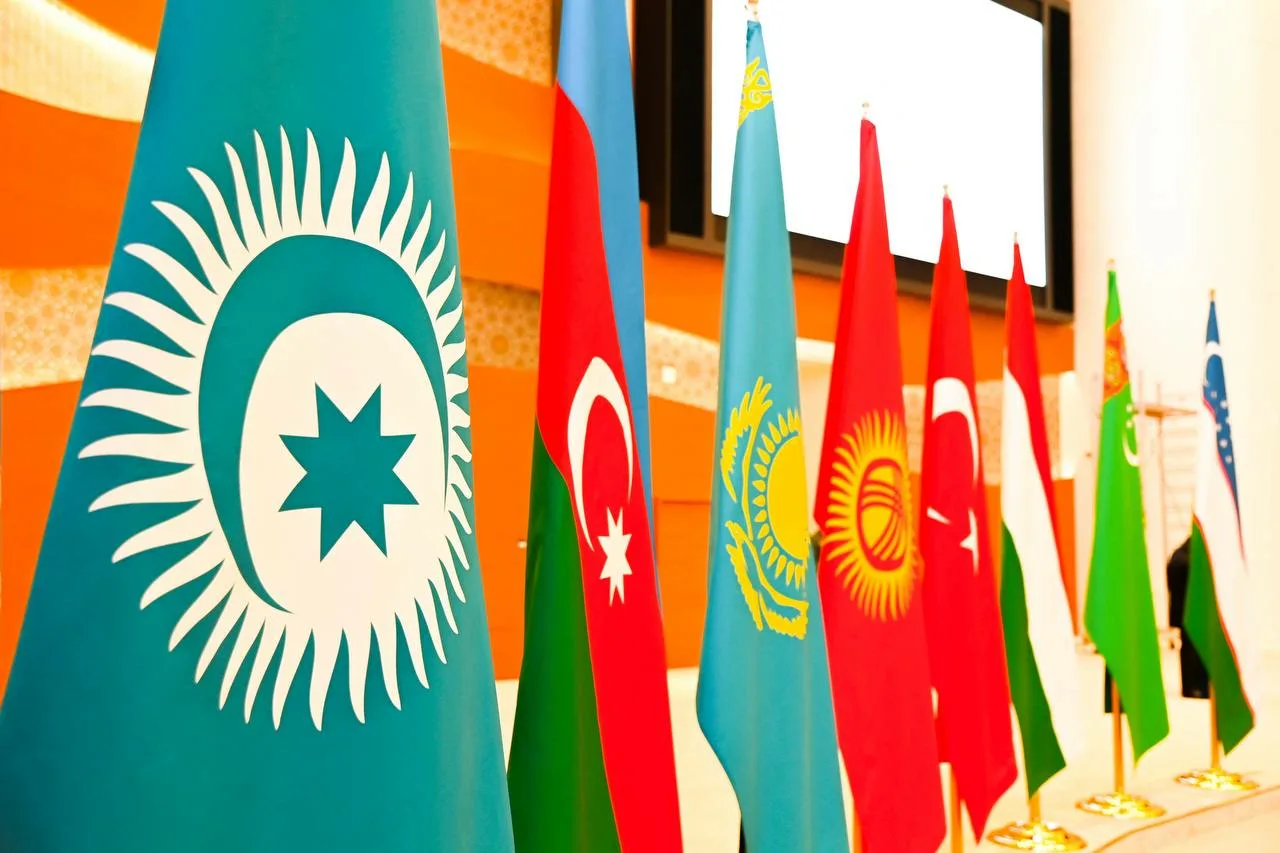
The prerequisites for intensifying cooperation within the framework of the OTC in the field of defense are created, according to experts, by the regular participation of partners in multinational maneuvers and military training programs organized by Turkey. The Turkish side intends to intensively develop this practice.
At the instigation of Ankara, the issue of increasing cooperation in the defense sector was first raised at the UTC summit in Astana in 2023 by Azerbaijani President I. Aliyev. The Astana Declaration, adopted by the heads of state at that time, contained a provision on “closer interaction in the field of the defense industry and military cooperation.” This topic was subsequently developed at an informal summit in Shusha (Azerbaijan) in 2024. It is characteristic that at the UTC summit in Bishkek in the same year, defense cooperation was not mentioned in the declaration. At the informal summit in Budapest in 2025, the intention of the organization's member countries to intensify efforts to expand multilateral cooperation in the defense industry was reaffirmed.
This question was voiced even more clearly at the Council of Heads of State of the UTC in Gabala (Azerbaijan) in October 2025. Shortly before this event, in July of the same year, the first meeting of heads of military-industrial complex enterprises of Turkic countries (except Turkmenistan) took place as part of the International Defense Industry Exhibition in Istanbul. At the summit, I. Aliyev, noting “the broad cooperation of the UTC countries in the military, defense and security spheres,” proposed to go further and hold joint military exercises of the organization’s member states in 2026. The Azerbaijani president justified this by the need to transform the UTG into “a more united and influential international player” that has a power component and is capable of “shaping global events, and not just adapting to them.”
Turkish President R. Erdogan supported I. Aliyev in his speech in Gabala, expressing confidence in the ability of the UTC to confront modern challenges and threats from a united position by strengthening security under the auspices of the organization.
Although the proposal for military maneuvers was not included in the final declaration of the summit, the document contains a provision to support the results of the first meeting of the heads of defense industry enterprises, provides for a second such meeting in 2026 in Baku and instructs “the relevant authorities to intensify cooperation in this area.”
Azerbaijan and Türkiye expect to use their chairmanship of the UTC in the next two years to consolidate the military aspect in the organization’s activities and begin the process of creating a regional security system under its auspices. As Azerbaijani experts note, under the chairmanship of Baku, the UTC “intends to transcend cultural cooperation and become a multifunctional political, economic and strategic bloc. The organization has the potential to emerge as a model of self-reliant regionalism, based on shared values and growing economic interdependence, and protected by collective strength."
In the near future, Ankara and Baku will focus on consolidating the military component among the permanent items on the UTC agenda, followed by the implementation of the idea of creating a Defense Industry Union within the organization, as well as a military council or the beginning of regular meetings at the level of defense ministers. Such intentions of Turkey are accompanied by a declaration of plans to expand cooperation in other areas of the UTC’s activities, including increasing the internal trade turnover of the organization’s member countries to $100 billion and the formation of the Bank for Development and Reconstruction, the Energy Union, arbitration bodies, as well as the implementation of the Trans-Caspian gas pipeline project.
At the same time, the Turkish leadership understands the need for gradual progress towards its goals. R. Erdogan realizes that currently the formation of a new military bloc is a very complex process. As experts point out, Türkiye is a member of NATO, which imposes certain obligations on it. Kazakhstan and Kyrgyzstan are members of the CSTO. Azerbaijan and Turkmenistan participate in the Non-Aligned Movement and formally cannot enter into military alliances on this basis. The accelerated transformation of the UTG into a military-political union, according to Turkish experts, may lead to increased disagreements within the organization. In addition, the political and economic situation, as well as a lack of financial resources, do not allow Ankara to begin implementing such a large-scale geopolitical initiative.
Turkish experts admit that the countries of the Turkic world differ greatly both in political regime and in foreign policy preferences. Therefore, creating a collective security architecture requires time and diplomatic flexibility.
The consolidation of the Turkish military presence in Central Asia and Transcaucasia will largely depend on the dynamics of international and regional processes, including the results of the confrontation around Iran. All this forces Ankara to adopt a wait-and-see approach and act in the planned directions within the current political and economic potential of Turkey and the situation that is developing in the Transcaucasus and Central Asia.
In addition, as analysts of the influential German Science and Politics Foundation note, a careful look at the range of military supplies from Turkey allows us to assert that Ankara is for most UTG countries “more of an additional supplier than a country capable of changing the rules of the game in matters of defense and security in the region.” Western analytical centers also refer to the rather narrow range of defense production in Turkey and the dependence of the Turkish defense industry on receiving high-tech components from more industrially developed foreign countries. In this regard, the American Institute of Central Asia and the Caucasus believes that military cooperation within the framework of the OTG “carries more risks than benefits.” In addition, as The Times of Central Asia notes, recently “the reputation of Turkey’s military products has wavered due to the fact that the effectiveness of the Bayraktars in the Ukrainian conflict has decreased over time.”
Nevertheless, the United States and the EU believe that the activities of the UTC objectively meet the interests of the West, since it enables the participating countries to more effectively pursue a multi-vector policy and strengthen their “strategic autonomy.” The West would like to aim the organization at countering the influence of Russia and China. According to The National Interest magazine, although “the UTC countries themselves have never defined the role of the organization in this way, this is the reality that is seen from Washington.”
The United States proceeds from the fact that Ankara, despite its ambitions, needs the support of Western countries “in projecting Turkish influence into the UTG.” This makes Turkey a manageable partner for the West and gives the US and the EU the opportunity to use political and economic levers to direct the process of Turkic integration in the right direction, since the UTC countries themselves are unable to implement many of the planned projects without the help of Western states. In addition, according to the Jamestown Foundation, in order to pursue a policy of balancing between the superpowers, the UTG will one way or another adhere to the line of developing contacts with the United States.
Turkey’s attempts to introduce a military component into the activities of the UTG are met with a positive reaction from the West. The United States, in particular, encourages such efforts, noting that in order to “become a more serious player on the global stage,” the organization will need to develop not only economic but also military capabilities. It is noted with satisfaction that “starting from 2021, there has been a significant shift in Turkey’s bilateral relations with the UTC countries in terms of intensifying cooperation in the field of defense and security. Such a turn of events could be a strategic gain for the West in an era of superpower competition" and "change the regional balance of power." It is noted that the topic of “physical security” is becoming increasingly important for Turkic countries, although its discussion is “not always open.”
Strengthening the military potential of the UTG, according to American experts, “could accelerate the emergence in the long term of the possibility of joint actions by the organization with the West.” The United States and European countries would like to gain access in this way to the defense sphere of many OTG states, where currently the Americans and the EU, by their own admission, “have a weak presence.” In this regard, the efforts of Turkey and the West in the region “mutually complement each other.”
It seems that the possible militarization of the UTG with the support of the West would be the most negative scenario for the development of this organization from the point of view of the interests of the CSTO.
The author’s opinion may not coincide with the official position of the CSTO member states